



23 May “Privacy by default” is not the same as perfect anonymity: inside a practical Monero + Bitcoin wallet
Common misconception: if a wallet advertises “privacy” it makes your transactions invisible. That’s the rhetorical shortcut many apps use, and it skews decisions. In reality privacy is a stack of mechanisms, defaults, and user choices — and trade-offs at every layer. This article walks a realistic US-focused case study: you want a single, non-custodial wallet that handles Monero (XMR), Bitcoin (BTC), and several other coins while minimizing linkability and exposure. We’ll examine how those goals are achieved technically, where they break down, and how to make concrete decisions that match your threat model.
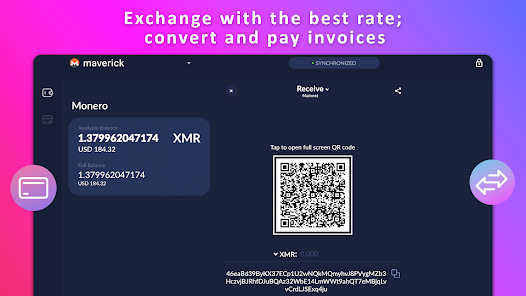
I’ll ground the discussion on a contemporary multi-asset privacy wallet that combines device-level encryption, Monero-specific protections (subaddresses and local view keys), Bitcoin privacy tools (Silent Payments, PayJoin v2, UTXO coin control), network anonymity (Tor and I2P support), and optional hardware integrations. The aim is not to sell one app but to translate mechanisms into a decision-useful mental model: what works, why, and what to watch next.
How the privacy stack is assembled: mechanisms that matter
Think of privacy as layered defenses. At the bottom is key custody and device security; above that are protocol-level privacy primitives (Monero ring signatures, Bulletproofs, confidential transactions variants), and above that are networking and operational practices (Tor, custom nodes, subaddresses, coin control). Each layer reduces different kinds of linkage.
Device-level protection: On modern phones and desktops, wallets use hardware-backed encryption (Secure Enclave on iOS; TPM on Android) to keep the private keys and seed phrases encrypted at rest. Local access is gated by a short PIN or biometrics. That protects against casual physical compromise or malware that cannot access the enclave. But it does not protect against targeted implants or OS-level exploits that can read memory after authentication — an important boundary condition for high-risk users.
Monero-level protections: Monero’s protocol gives strong on-chain privacy via ring signatures, stealth addresses, and RingCT. A privacy-conscious wallet leverages these by keeping the private view key on-device only and offering subaddresses, which create per-recipient addresses that break simple address reuse fingerprinting. Background synchronization preserves usability without exposing keys elsewhere. The limitation: Monero’s privacy is robust on-chain, but network-layer metadata (which IP saw which peer) can still leak unless you route through Tor or I2P or run a remote node you control.
Bitcoin privacy tools: Bitcoin lacks Monero’s default privacy. Wallets therefore add layers: coin control to avoid accidental mixing of unrelated UTXOs, transaction batching to reduce address reuse, PayJoin (P2EP) to obfuscate inputs by coordinating a transaction with the recipient, and Silent Payments to hide the linkage between invoices and senders. These features reduce linkability but do not equal Monero’s default unlinkability. They depend on recipient support (PayJoin requires the counterparty to cooperate) and careful local discipline (don’t mix private and public funds on the same address).
Case-led comparison: three real operational choices
Imagine three users in the US with different priorities. We’ll show how the same wallet features map to different decisions and trade-offs.
User A — “Privacy-first everyday”: wants plausible deniability for retail usage and occasional over-the-counter trades. She enables Tor-only mode, uses Monero for peer payments via subaddresses, connects Bitcoin payments via PayJoin where merchants support it, and keeps a hardware-backed key (Ledger or an air-gapped Cupcake) for larger balances. This setup minimizes IP leaks, keeps private keys local, and leverages Monero’s strong on-chain privacy for cash-like transfers. Trade-offs: convenience (Tor can be slower), and merchant compatibility (many US merchants do not accept XMR).
User B — “Custody-lite but cross-chain”: needs swaps between BTC, XMR, and ETH with low friction for decentralized routing and competitive rates. He relies on the built-in exchange and NEAR Intents routing to perform cross-chain swaps without centralized custody. This gives rapid access to liquidity and privacy-preserving hops, but it introduces counterparty complexity: while the wallet is non-custodial, market-maker routing exposes timing and volume patterns to on-chain liquidity providers. Trade-off: speed and convenience versus surface area of counterparties used during swaps.
User C — “Regulated-but-private”: a small business in the US wants to accept BTC and LTC payments and avoid accidental data collection. They use Ledger-integrated accounts for bookkeeping, enforce mandatory shielding for Zcash receipts to prevent address leaks, and use UTXO coin control plus batching for payouts. This minimizes inadvertent leakages and preserves auditability. Trade-off: mandatory shielding for ZEC is safe but complicates migrations from older Zashi seeds; known incompatibilities require manual transfers for some users.
Where the protections fail or need user discipline
No wallet makes privacy automatic in all dimensions. Here are concrete failure modes and what they depend on.
Network metadata is the weak link: if you use a remote node over a clearnet connection, your IP can be correlated with the transactions that node broadcasts. Tor-only or I2P mode and running your own nodes reduce that risk. The wallet’s support for custom nodes and Tor/I2P is therefore crucial — but setting up a remote node or trusting a third-party node is an operational decision that not all users can execute correctly.
Cross-chain swaps and on-ramp/off-ramp behavior: swapping inside a wallet minimizes custody risk but creates observable flows among market makers. Even with decentralized NEAR Intents routing, timing and amounts can be linked across chains. If your threat model includes sophisticated chain analysis or subpoenas on market-maker records, privacy can be degraded. In short: while non-custodial and no-telemetry design limits developer-side surveillance, blockchain-level and counterparty-level correlations remain.
Hardware integration: Using Ledger or an air-gapped Cupcake increases private key security and reduces remote-exploit risk. But secure use demands correct procedures: keep firmware up to date, verify device authenticity, and physically secure the backup seed. The device mitigates but does not eliminate social-engineering or supply-chain threats.
Practical heuristics — a usable mental model to choose settings
Build privacy with three simple axes: custody, network anonymity, and transaction opacity.
1) Custody: Prefer non-custodial with hardware signing for high-value holdings. The wallet’s open-source, zero-telemetry policy plus local-only private view keys for Monero satisfy this axis by design. If you must trade fast, accept a small custody surface for swaps but limit amounts.
2) Network anonymity: Default to Tor/I2P if you are sensitive to IP-level linkage. Use custom nodes when you can run them, otherwise connect to nodes you control or to trusted providers, understanding the trade-offs.
3) Transaction opacity: Use Monero for highest on-chain unlinkability; where you need Bitcoin, use coin control, batching, PayJoin, and Silent Payments. Treat BTC privacy as operational rather than protocol-level; discipline matters more than one-off settings.
To translate this into immediate actions: enable Tor-only mode if you care about IP privacy; keep Monero private view keys on-device only; segregate accounts for different purposes (do not mix public exchange funds with private spending wallets); and use hardware signing for cold storage. If you want to try the wallet in this article from a trusted source, here’s the official place to access installers and releases: cake wallet download.
Limitations, unresolved issues, and what to watch next
Current strong points: Monero’s on-chain privacy remains robust when used correctly; device-level encryption and zero-telemetry reduce developer-side attack surfaces; Tor/I2P support addresses basic network-layer risks; hardware integration significantly reduces key-exfiltration risk.
Key limitations to monitor: (1) Bitcoin’s privacy improvements are incremental and rely on broader ecosystem adoption (merchant PayJoin support, wallets using Silent Payments). (2) Cross-chain swaps via decentralized routing reduce reliance on centralized custodians but increase the number of counterparties and observable legs — a trade-off between convenience and traceability. (3) Zcash migration incompatibilities from some earlier wallets (Zashi) require manual transfers — a practical migration headache for affected users. (4) Device-level protections assume up-to-date OS and hardware; targeted state-level actors or persistent firmware exploits remain an open risk.
Signals to watch: wider adoption of PayJoin and wallet-level batching among US merchants would materially improve BTC privacy; improvements in peer-to-peer swap routing that reduce the number of observable intermediary hops would lower traceability for swaps; increased usability of running personal nodes (lightweight, private nodes) would reduce dependence on third-party nodes. Any change in regulatory pressure around privacy coins in the US could affect on-ramps and custodial services, so watch compliance discourse and exchange delistings as operationally relevant signals.
FAQ
Is Monero truly anonymous if I use a mobile wallet?
Monero provides strong on-chain privacy through ring signatures, stealth addresses, and confidential amounts. A privacy-focused wallet preserves that when the private view key never leaves the device and when you route network traffic through Tor or I2P or use a trusted node. That said, anonymity is conditional: network metadata, device compromise, or careless address reuse can degrade privacy. Use subaddresses, avoid public node connections, and maintain device hygiene to keep anonymity strong.
How effective are Bitcoin features like PayJoin and Silent Payments?
These features materially reduce linkability on Bitcoin, especially when recipients and wallets support them. PayJoin hides which inputs belong to sender versus receiver, and Silent Payments hide the relation between invoices and payments. However, they require ecosystem participation; if you use legacy addresses or mix private funds with publicly-known UTXOs, the benefits shrink. Treat BTC privacy as an operational practice rather than a property you get automatically.
Should I always run Tor-only mode?
Tor-only mode is a strong default for users who prioritize IP privacy. The trade-offs are speed and occasional compatibility issues with some node setups. If low latency is critical and you trust your node provider, you might accept clearnet; otherwise, Tor or I2P is the safer general-purpose choice.
What does “non-custodial and zero-telemetry” practically mean?
Non-custodial means the wallet keeps private keys on your device and never holds funds for you. Zero-telemetry means the developers do not collect transaction histories, IPs, or device IDs. Together these reduce the avenues for a centralized party to correlate your activity, but they do not prevent blockchain-level analysis or network-level leaks unless you take additional steps (custom nodes, Tor, hardware signing).
Final, practical takeaway: choose tools that match your threat model and be explicit about which layer you are defending. If you need cash-like transfers and low linkability, prioritize Monero plus Tor and hardware keys. If you must use Bitcoin, adopt disciplined coin control, PayJoin, and Silent Payments where available, and treat cross-chain swaps as a convenience with traceability costs. Privacy is not a single switch — it is an engineering practice that requires layering, habit, and occasional hard choices.
No Comments